A quick search for a stem cell clinic can feel overwhelming: glossy websites, bold promises, “miracle” testimonials, and prices that vary wildly. The most important truth is this—quality clinics don’t sell hope; they prove safety, document processes, and communicate evidence clearly. If you want a realistic, case-specific plan and help evaluating options, book your consultation today.
What a Legit Stem Cell Clinic Should Actually Offer
A trustworthy stem cell clinic (or regenerative medicine clinic) operates like a medical program, not a marketing funnel. That means you should see:
- A medical evaluation before any payment pressure
- Clear diagnosis-focused recommendations (not “one protocol for everything”)
- Transparent information about the product: source, processing, testing, and handling
- A realistic discussion of benefits, limitations, and alternatives
- Documented consent and a follow-up plan
The International Society for Stem Cell Research (ISSCR) publishes a treatment guide designed to help patients make informed decisions and understand what to be cautious about when considering stem cell interventions.
Why Regulation Matters More Than Branding
Many clinics use similar language—“advanced,” “cutting-edge,” “clinically proven”—but regulation and evidence are what separate responsible care from risky experimentation.
The U.S. FDA warns that regenerative medicine products (including stem cell and exosome products) are often marketed with misleading claims, and that many products promoted for various conditions are unapproved.
The FDA also describes serious harms reported from unapproved products, including infections and other adverse events—an important reminder that “natural” does not automatically mean “safe.”
Even if you’re seeking treatment outside the U.S., the lesson holds: a credible stem cell treatment center should be transparent about the legal status of what it offers in that country, and about what evidence supports your specific condition.
The Biggest Red Flags (Avoid These Immediately)
If you see any of the following, step back:
- “Guaranteed cure” or “works for any disease” promises
- Claims that it’s “approved everywhere” without showing documentation
- No clear explanation of the cell source (autologous vs donor-derived)
- No discussion of risks, side effects, or contraindications
- Pressure to pay a deposit before you speak to a clinician
- Reliance on celebrity stories and testimonials instead of data
Consumer protection agencies have acted against deceptive stem cell marketing. For example, in January 2025 the U.S. FTC announced court orders that banned the co-founders of a company from marketing stem cell therapy and required payment of refunds/civil penalties related to misleading advertising.
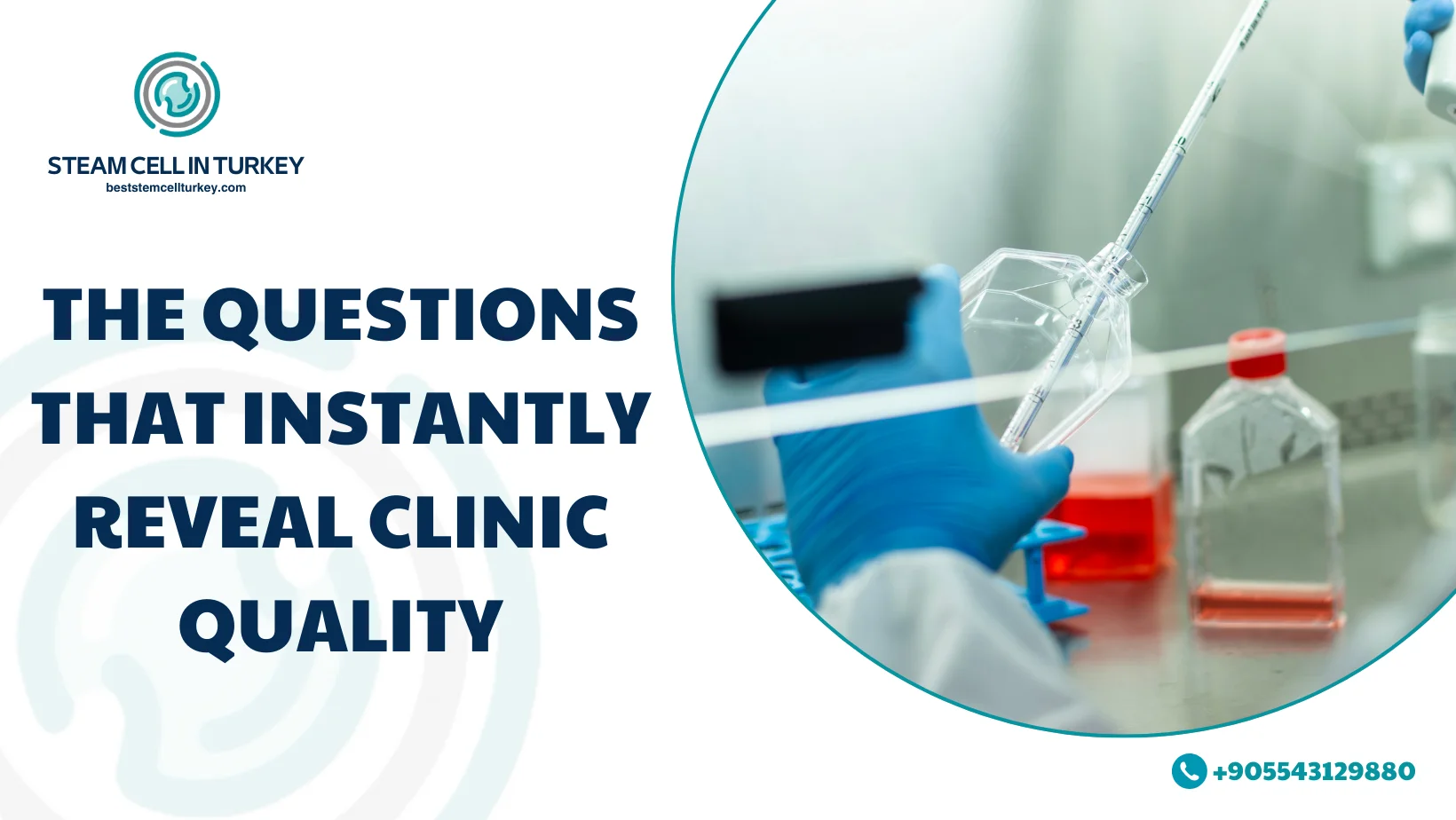
The Questions That Instantly Reveal Clinic Quality
When you contact a cell therapy clinic, ask questions that force clear, verifiable answers:
Product and processing
- What exactly is being administered (cells, tissue-derived material, exosomes, “SVF,” etc.)?
- What is the source, and do you have documentation?
- What testing is performed (sterility, identity, viability, release criteria)?
Evidence and indication
- What published evidence supports this for my diagnosis (not a general body system)?
- Are outcomes tracked using objective measures (imaging, validated scores, standardized photos)?
- Do you have complication rates and follow-up data?
Safety and oversight
- Is this an approved indication, a regulated clinical trial, or an experimental intervention?
- What does informed consent include?
- Who manages complications, and where?
Mayo Clinic’s research and education efforts include work focused on “prebunking” or correcting misinformation about unproven stem cell advertisements—highlighting how common misleading marketing can be.
What “Evidence-Based” Looks Like in the Real World
In a responsible stem cell center, you should hear language like:
- “This is established for X, experimental for Y.”
- “Here’s what studies suggest, and here’s what we still don’t know.”
- “These are the realistic outcomes and timeline.”
- “These are alternative treatments and why we recommend this plan.”
The ISSCR patient materials emphasize the difference between approved treatments and experimental interventions, helping patients understand how new therapies should be developed and tested before broad marketing.
Understanding Costs Without Getting Tricked
Pricing alone doesn’t tell you whether a clinic is good or bad—but unclear pricing is often a warning sign.
A transparent quote typically clarifies:
- What’s included (consultation, diagnostics, imaging, lab tests, procedure, follow-ups)
- How many sessions are expected and what “maintenance” might mean
- Potential add-on costs (extra injections, extra joints, additional days, post-care)
If the clinic refuses to give a written breakdown, or bundles everything into a vague “package,” treat that cautiously. A legitimate stem cell treatment center should be comfortable explaining exactly what you’re paying for and why.
Our Approach (Best Stem Cell Turkey)
At Best Stem Cell Turkey, we focus on clarity and patient-first decision support. If you’re searching for a reputable stem cell clinic, we help you:
- Compare options using a safety-and-evidence checklist
- Understand what questions to ask (and what answers matter)
- Build a plan based on your condition, timeline, and realistic goals
- Avoid hype-driven treatments and focus on transparent, documented care
Visit our website and book your consultation here: Best Stem Cell Turkey
FAQs about Stem Cell Clinic
How do I know if a stem cell clinic is legitimate?
A legitimate clinic provides clear documentation, discusses risks and alternatives, and explains whether the treatment is approved or experimental. ISSCR resources outline what to look for and what to be cautious about.
Are stem cell treatments always safe?
No. The FDA reports serious adverse events associated with unapproved regenerative products and warns consumers about misleading marketing.
Why do clinics claim to treat many unrelated diseases?
Broad “treats everything” claims are a common marketing pattern in unproven regenerative medicine services. FDA consumer alerts specifically address misleading claims around regenerative medicine products.
Should a clinic show clinical trial information?
If the intervention is experimental, a trustworthy clinic should explain the oversight pathway and, where applicable, share trial registration or published evidence relevant to your condition.
What’s a major warning sign?
High-pressure sales tactics. Consumer protection actions (like the FTC case in 2025) show that misleading stem cell advertising can happen, so skepticism is healthy.
Choosing a stem cell clinic is less about finding the flashiest website and more about finding documented safety, real oversight, and condition-specific evidence. If you want help evaluating your options and building a realistic plan you can trust, book your consultation today.
References
- FDA — Consumer Alert on Regenerative Medicine Products (Stem Cells & Exosomes):FDA
- FDA — Important Patient & Consumer Information About Regenerative Medicine Therapies: FDA
- FDA — Public Safety Alert on Unapproved Stem Cell & Exosome Products: FDA
- ISSCR — The ISSCR Guide to Stem Cell Treatments: ISSCR
- ISSCR — Patient Handbook on Stem Cell Therapies (PDF): ISSCR
- Mayo Clinic — Stem Cell Therapy Clinical Trials (incl. misinformation study): Mayo Clinic
- Mayo Clinic News Network — Dispelling the hype of stem cell interventions: Mayo Clinic
- FTC — Stem Cell Institute Co-Founders Banned From Marketing Stem Cell Treatments (Jan 2025):FTC
- AABB — Georgia stem cell companies banned following misleading ads (Jan 2025): AABB
Ready to plan with confidence?
→ Book a Free Consultation
→ Explore Financing Options
→ contact with us via what’s up