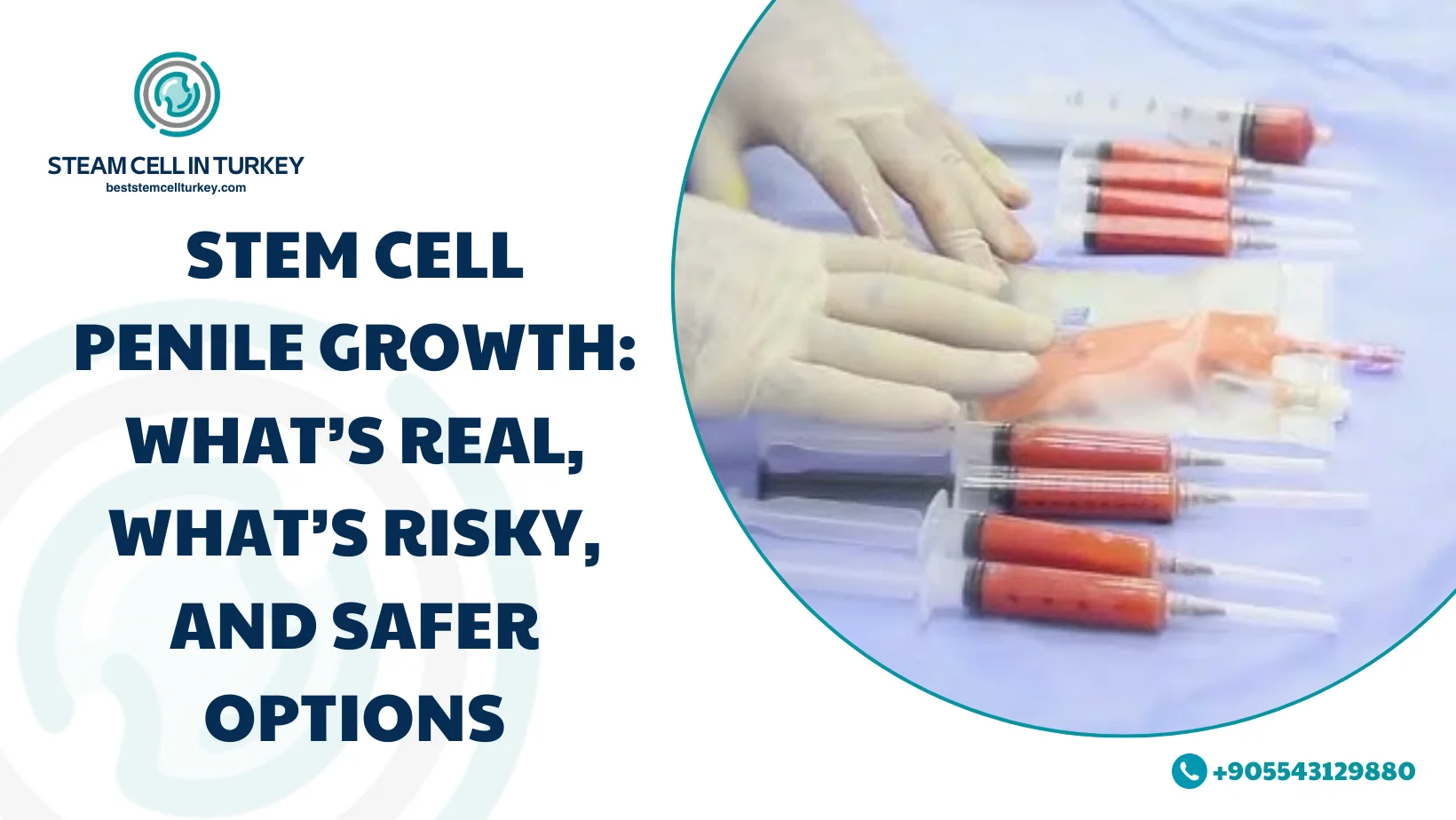
Searching for stem cell penile growth usually means one of two things: you want meaningful improvement in sexual confidence and performance, or you’re hoping for actual size increase. Online ads often blur these two topics on purpose. The safest path is clarity—what’s medically supported, what remains experimental, and what is simply risky marketing. If you want a private, professional review of your situation and a realistic plan, book your consultation today.
What people mean by “penile growth”
When people search for “penile growth,” most marketing quietly bundles several different goals into one promise—so it sounds bigger, faster, and more certain than the evidence actually supports.
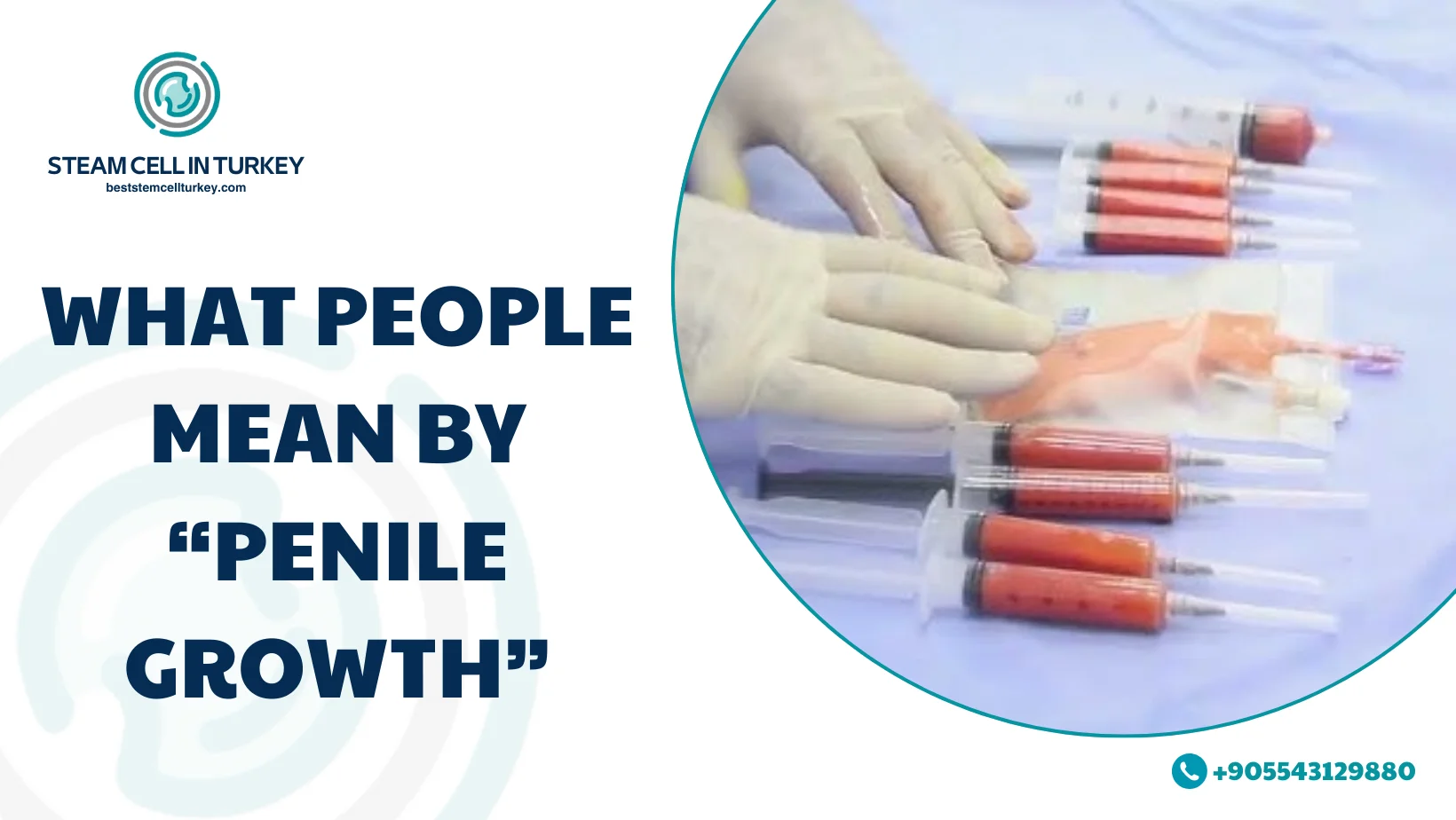
In real terms, “penile growth” marketing often mixes:
- Better erections (hardness, reliability, duration)
- Sensation changes (comfort, sensitivity, confidence)
- Cosmetic size claims (girth/length—often without clear measurement standards)
- “Rejuvenation / regeneration” language (broad, vague improvement claims)
The problem is that much of the legitimate stem cell research in this area focuses on erectile dysfunction (ED), not guaranteed size change. A responsible clinic should separate “function improvement” from “size augmentation” and be honest about what evidence exists.
What the science actually studies: ED more than size
When you see penile stem cell therapy claims online, the strongest clinical research is typically about ED—especially after prostate surgery or in specific medical contexts.
- For example, a Phase I human trial studied autologous adipose-derived regenerative cells for ED after radical prostatectomy and reported early safety-focused findings (Phase I trials are primarily about safety/feasibility, not proving big outcomes).
- Recent systematic reviews and academic discussions continue to evaluate “cell therapy” for male sexual dysfunctions, but they generally emphasize that evidence quality varies and more rigorous trials are needed.
So if a website promises certain “centimeters gained” from stem cell penile enlargement, that’s not how credible medical literature typically communicates results.
Major safety reality: unapproved regenerative products are heavily marketed
This topic isn’t only about whether something works—it’s also about whether it’s safe and appropriately regulated.
- The U.S. FDA warns that regenerative medicine products (including stem cell products and exosome products) are regulated and that misleading marketing is common.
- It also states that the only FDA-approved stem cell products in the U.S. are blood-forming stem cells derived from umbilical cord blood for specific blood disorders—not for other uses.
- The FDA’s consumer information also describes serious harms reported from unapproved regenerative products, which is why transparency and oversight matter before anyone pays for a “penile growth” package.
What reputable urology organizations say about “augmentation” procedures
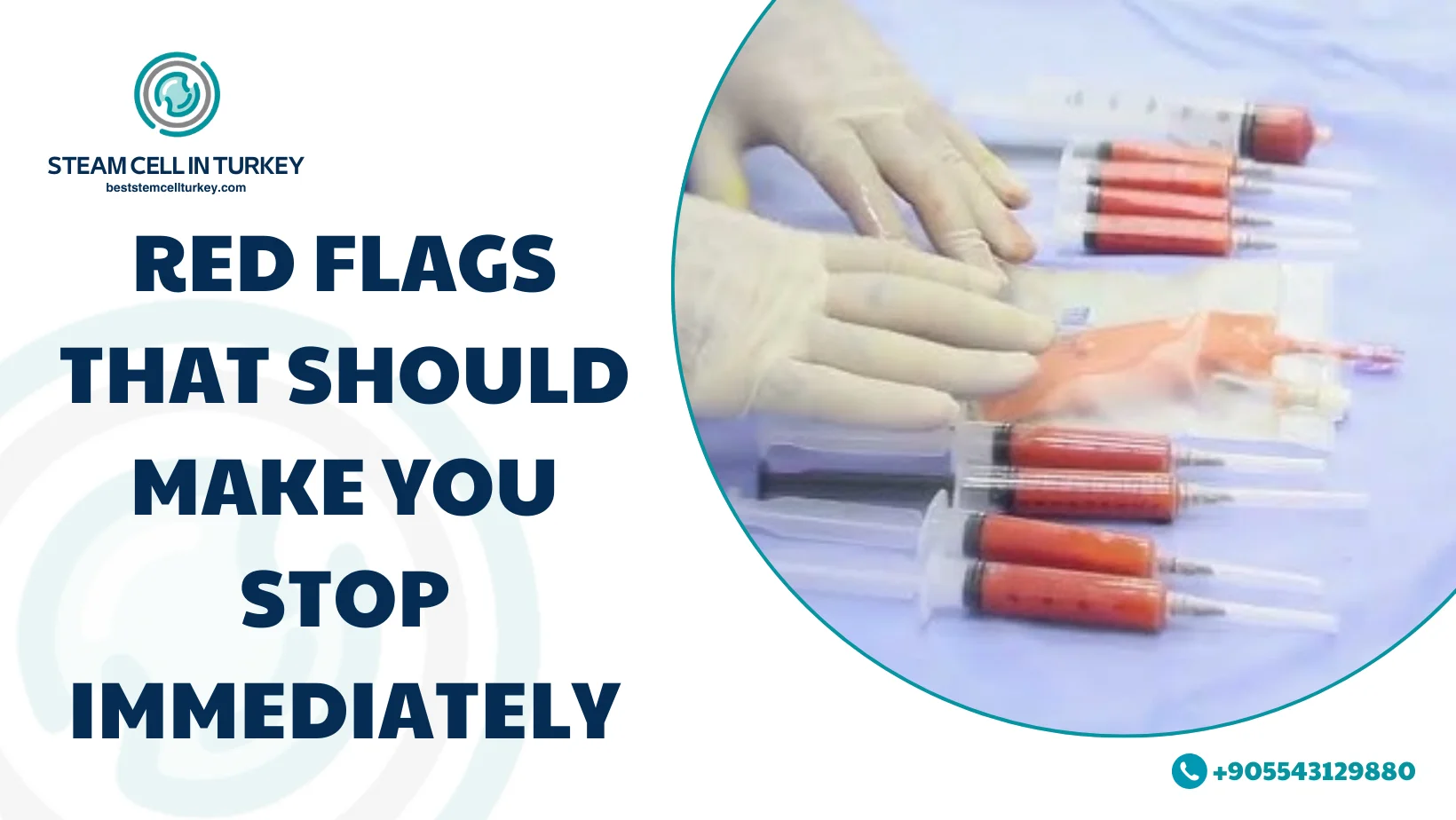
Red flags that should make you stop immediately
If you’re researching penile enhancement stem cells, treat these as deal-breakers:
- Guaranteed size increase (“X cm” promises)
- “Works for everyone” claims
- No written explanation of what is injected (cells? SVF? exosomes? donor products?)
- No discussion of complications, follow-up, or emergency care
- Pressure to pay a deposit before medical evaluation
Patient guidance also warns about “pay-to-participate” medicine disguised as research. The ISSCR treatment guide exists specifically to help patients evaluate stem cell interventions and avoid misleading claims.
How to evaluate a clinic offer safely (use this checklist)
If a clinic offers regenerative penile therapy, ask for clear, written answers to:
- What is the medical indication? (ED, Peyronie’s disease, post-surgery nerve injury, cosmetic request, etc.)
- What exactly is the product? (autologous cells vs donor-derived material; “exosome” claims)
- What oversight applies? (approved use, regulated trial, or experimental service)
- What objective outcomes will be measured? (validated ED scores, rigidity measures, patient-reported outcomes)
- What is the complication plan and follow-up schedule?
If they cannot answer these without marketing language, it’s not a medical program.
What’s realistic to expect (honest framing)
For many men, the most meaningful “change” is improved erectile function and confidence—not dramatic size changes. If your primary issue is erection quality, addressing ED properly can make the penis appear fuller and more functional, which some men interpret as “penile growth,” even though it’s not true anatomical enlargement.
Guideline-based ED care often begins with:
- medical evaluation of cardiovascular/metabolic risk
- evidence-based medications when appropriate
- counseling for anxiety/performance factors
- targeted treatments under specialist care
The AUA Erectile Dysfunction guideline provides a clinical strategy for ED diagnosis and treatment, underscoring that ED management is a medical pathway—not a one-size-fits-all injection pitch. (AUA Network)
A Private, Professional Conversation — Not Internet Noise
This is a sensitive topic—and it deserves a professional, private conversation, not internet noise. Many ads intentionally blur “better function” and “bigger size,” then sell certainty where medicine is careful.
At Best Stem Cell Turkey, we help you separate reality from risky marketing:
- Private case review: your goals, your concerns, your medical context—handled discreetly
- Clear separation of claims: function improvement vs true size augmentation (in writing)
- Evidence-aware guidance: what studies actually support, and what remains experimental
- Red-flag protection: we spot “guaranteed centimeters” claims and vague product descriptions fast
- Safer next steps: questions to demand, documentation to request, and alternatives worth considering
If you want a private, professional review and a realistic plan, book your consultation: Best Stem Cell Turkey
FAQs about Stem Cell Penile Growth

Is stem cell penile growth scientifically proven to increase size?
Most clinical research focuses on erectile function (ED), not guaranteed size increase. Be cautious of clinics promising exact “growth” numbers. (PubMed)
Are stem cell injections for sexual health approved?
Approval depends on the country and the exact product. The FDA warns many regenerative products are unapproved and that misleading marketing is common. (U.S. Food and Drug Administration)
What’s the biggest red flag?
Guaranteed enlargement claims and refusal to provide written product details, oversight status, and a complication plan. (U.S. Food and Drug Administration)
What do urology organizations say about girth injections like fat injection?
The AUA states subcutaneous fat injection for increasing penile girth has not been shown to be safe or effective. (AUA Network)
If a clinic says it’s a “clinical trial,” should I trust it?
Verify the study details and oversight carefully. The ISSCR guide helps patients understand what legitimate clinical research looks like and what to be cautious about. (ISSCR)
If you’re considering stem cell penile growth, the safest first step is separating reality from marketing: most credible evidence relates to erectile function research, while guaranteed enlargement claims are a major warning sign. If you want a private, professional review and a realistic plan you can trust, book your consultation today.
References
- FDA — Consumer Alert on Regenerative Medicine Products (Stem Cells & Exosomes) — FDA
- FDA — Press Announcement — FDA
- AUA — Erectile Dysfunction (ED) Guideline — AUA
- AUA (PDF) — Erectile Dysfunction Guideline — AUA
- AUA — Penile Augmentation Surgery — AUA
- PubMed — Haahr et al. (2016) — PubMed
- PMC Review (2021) — PMC
- OUP Academic (2024) — OUP
- ISSCR — Treatment guide — ISSCR
Ready to plan with confidence?
→ Book a Free Consultation
→ Explore Financing Options
→ contact with us via what’s up